Occupation Cartography

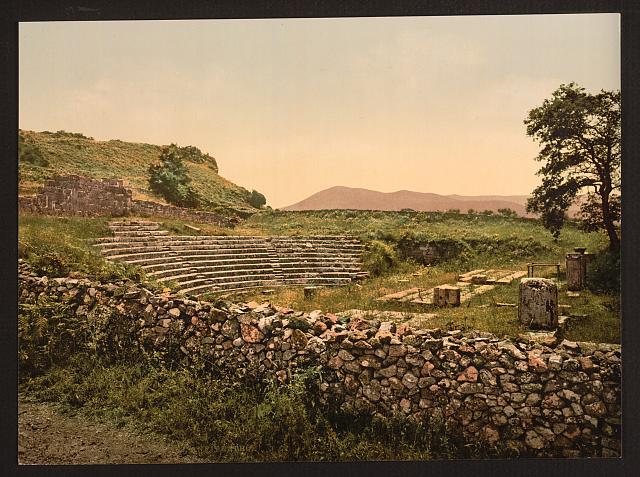
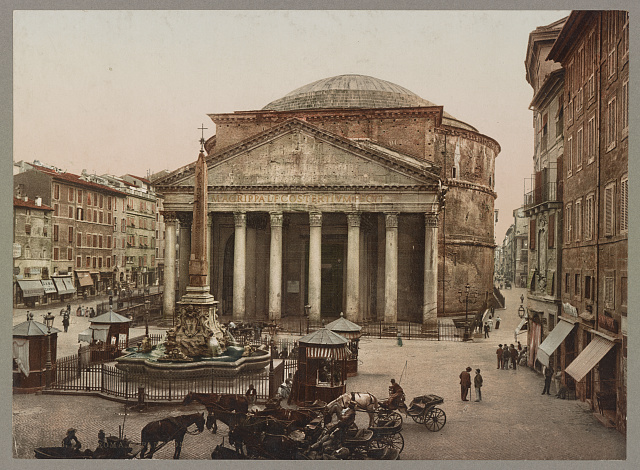
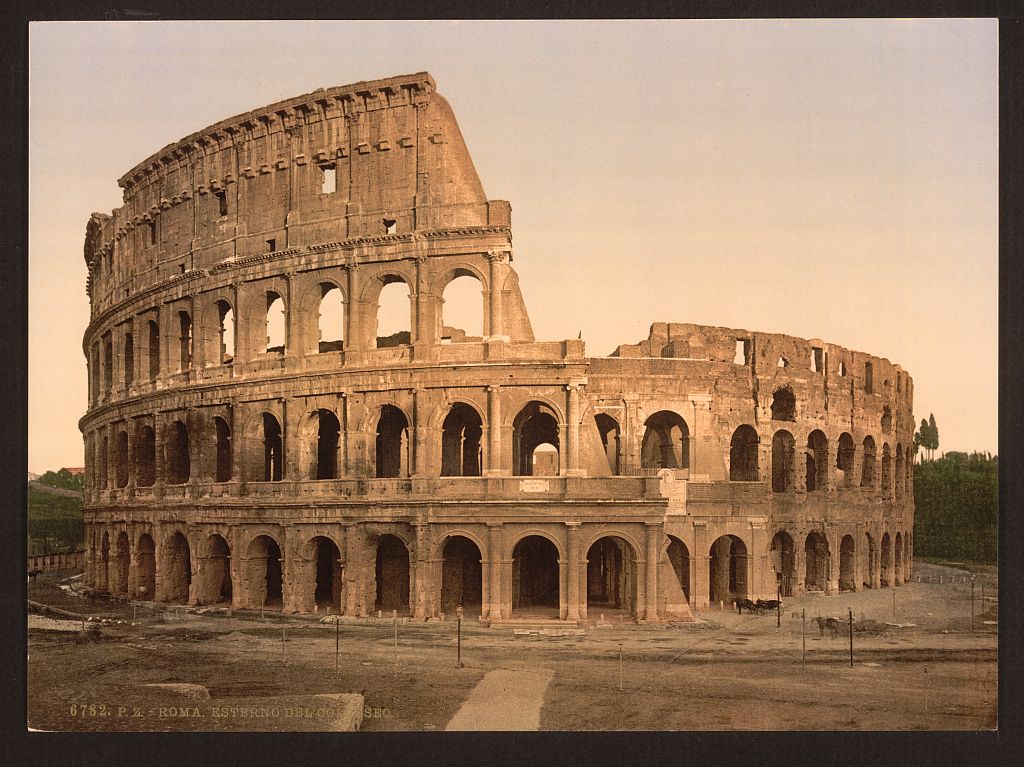
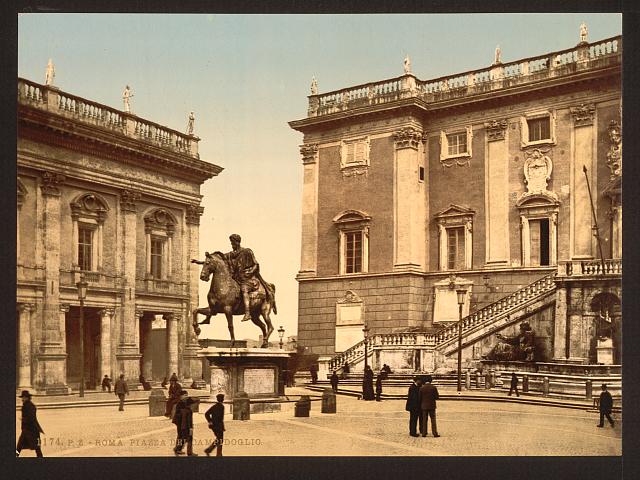
Over the last year or two I’ve seen many social media posts about “occupying powers” and accusations about nations or peoples being “colonizers”. I’ve been thinking that maps may help clarify some of the confusion.


Posted in Asia, Cartography, Maps, Middle East | Tagged , , , , , | Leave a comment

Ex Libris

You don’t have to be a bibliophile to enjoy this marvelous animated short film created by Garik Seko. Although he was born in Georgia, he spent most of his working life in Prague. Seko specialized in the animation of physical objects. In the case of Ex Libris a library of anthropomorphized books. The amusing film  may be seen here.


Posted in Uncategorized | Tagged , | Leave a comment

Bookstore (the play)

The Bookstore by Michael Walek opened January 10 off-Broadway at 59E59 Theaters. Produced by New Jersey Repertory Company, the play is directed by William Carden and stars Quentin Chisholm, Ari Derambakhsh, Arielle Goldman, and Janet Zarish.

The play is described as a love letter to small bookstores and the bibliophiles who make them a home, The play is about indie bookstore owner Carey, who “has a special gift for recommending the perfect book…. While trying to survive in New York City, she has created a found family of coworkers who unite over their passion for literature–and a glass of wine. This band of misfits turn the pages of their lives and learn to navigate the plot twists that are thrown their way.”

Hopefully it won’t close before I get a chance to see it.


Posted in Uncategorized | Tagged , , , | Leave a comment

Amsterdam in motion

Filmed over three days in August 2024, this wonderful video shows off Amsterdam at its touristic finest. Filmmaker Kirill Neiezhmakov captured 60 sequences and 40 of them made his final cut which you can see below.  The film is a mixture of hyperlapse, hyperzooms and experimental AI morphing transitions. Altogether it makes a marvelous invitation to visit one of my favorite cities.


Posted in Uncategorized | Tagged , , | Leave a comment

Bookstore Tourism: Your Suggestions Part Deux

I haven’t been to Wooster, Massachusetts, for more than fifty years, so I never visited the Bedlam Book Cafe which only opened in 2018, but if I ever pass that way again, I’ll definitely drop in. Many thanks to TBTP follower Gail S. for the suggestion.

“Bedlam Book Cafe, Fine Used Books From the Academic to the Esoteric,” is located at 138 Green St. . It is known locally for a wide-ranging, curated selection of new and used books, especially fiction and academic presses, within a cozy, inviting atmosphere in a renovated mill building, complemented by delicious coffee, smoothies, and treats, all at reasonable prices, making it a beloved spot for book lovers and café goers. 

Here’s what the founders have to say about Bedlam:

a story of bedlam

“Worcester has everything, except a cool used bookstore!” That was what Nicole DiCello and Patrick Warner said when they moved to Worcester in the summer of 2014. At first, they tried to convince some of their close friends (who own independent bookstores in MA and VT) to open a bookstore in Worcester, to no avail. Temporarily deterred, they kept dreaming that someday they’d be in the position to open a store themselves. That time came in early 2018 when Nicole decided she was ready for a career change and wanted to pursue her passion. It was during this time of intense political and personal upheaval that Bedlam Book Cafe was born, and Nicole became the owner of Worcester’s next generation of bookstores when they opened their doors on November 2nd, 2018. Patrick joined in to collaborate with Nicole. And while Nicole is on-site operating the store day-to-day, together they each manage and have input on this vibrant intellectual and cultural space.

Nicole was raised in Ohio and Indiana, coming to Massachusetts in 1997 after a 5-year stint in Ithaca, New York where she went to college, lived, and worked. It was in Ithaca that Nicole developed a love for books, frequenting Ithaca’s many amazing bookstores and book sales, and grew an affinity for healthful living. She credits the famous Moosewood restaurant with kicking off her love affair with juices. After 20 years in the corporate world and some time spent at Emerson College getting her M.F.A. in Poetry, Nicole believes it’s more vital than ever to bring the culture of a great bookstore/cafe to the community of Worcester and to make sure that it serves all of Worcester’s diverse population. She currently serves on two boards: the Diversity and Inclusion Advisory Committee for the City of Worcester, and the Worcester County Poetry Association (WCPA). So you can expect a diverse and kickass poetry section with lots of poetry readings.

Patrick is a lifelong Massachusetts resident, having spent many years in Amherst and Northampton where he went to college and lived and worked at legendary used bookstores such as Albion Books. A true bibliophile, he ran a small online business in the early 2000s called Situation Books, among his closest friends are the proprietors of Raven Books in Northampton, MA and Crow Books in Burlington, VT. Patrick’s love of literature and culture runs deep, extending back to his early teens when he became aware of the Beat Poets. As fate would have it, when Patrick was in his early 20s he met Allen Ginsberg. They became friends and traveled together as part of an “invasion of poets” to Nicaragua in 1986 during the Contra War, and remained friends until the poet’s death in 1997. Extensive travels in Europe, Central America and the Caribbean have informed Patrick’s worldview and cultivated an abiding fascination with the world’s cultures, arts, and literature.

Nicole and Patrick have known each other since 1999. They’re passionate about books, community, culture, curiosities, Worcester, diversity, and healthful living. They provide a curated cache of fine used and remaindered books ranging from the academic to the esoteric. Valuing the lived experience, Nicole and Patrick envision Bedlam Book Cafe as a hub of social and intellectual energy, and as a resource for writers, scholars, artists, poets, and interested readers. And with a rotating menu of fresh organic smoothies, Bedlam nourishes the body as well as the mind.


Posted in Uncategorized | Tagged , , | Leave a comment

Ten Words We Should Revive

Sometimes contemporary language fails to provide the nuance required to adequately express our thoughts and opinions. Here are some that I encourage you to sprinkle throughout everyday conversations to confound and entertain.


Posted in Uncategorized | Tagged , , , | 2 Comments

Inventio Fortunata (unrelated to Harry Potter)

With constant coverage of Greenland in recent news cycles, the infamous Mercator projection has come under fire anew for distorting the real shape of the world’s continents — objects closer to the poles appear larger than they should. That results in North America looking larger than Africa, or China looking smaller than Greenland, when really the opposite is true.

Those criticisms aren’t wrong, but they ignore that the original point of Mercator’s projections were as a navigational tool for sailors. And, despite the map’s shortcomings, it remains extremely handy for that purpose.

I bring up Mercator and his controversial cartography because I was today years old when I discovered that the much maligned Belgian was the source of some truly wacky notions about the Arctic region and the North Pole that confused cartographers, geographers, and mariners for decades.

In 1577, Mercator wrote a letter the English scientist John Dee, in which he described the geography of the North Pole based on reports from a 14th Franciscan monk from Oxford, who travelled the North Atlantic region on behalf of the King of England. An account of his travels was published in a travelogue titled Inventio Fortunata  (or “Fortunate Discoveries”), a book that has been lost for more than 500 years. However, a summary of this book was published in another travelogue called the Itinerarium by a traveler from the Dutch city of ‘s-Hertogenbosch named Jacobus Cnoyen. It was in Itinerarium where Mercator read about the astonishing claims made by the unknown author of the Inventio Fortunata.

According to the account relayed by Cnoyen, the North Pole was a sea surrounded by four large islands with high plateaus and mountains. The islands were divided by massive rivers flowing inward forming a large whirlpool. At the center of this whirlpool stood a vast black rock, 33 miles in circumference. This rock was believed to be magnetic and the source of the mysterious attraction that pull all compass needles towards the north.

When Mercator published his world atlas in 1595—a ground-breaking work and the first collection of geographical maps to be called an Atlas—he included this black magnetic feature on his map of the North Pole, labelling it Rupes Nigra et Altissima, or “Black and Very High Cliff.”

Mercator also claimed that one of the four polar islands was inhabited by pygmies standing four feet tall, another detail drawn from the old English voyages described in the Inventio Fortunata. It is possible that the author of the Inventio was in fact referring to the indigenous inhabitants of Lapland, who are of relatively short stature.

In 1606, Jodocus Hondius published an influential revision of the Arctic map, redrawing the four polar islands. Attempting to reconcile recent exploration with a century of established cosmographical tradition, Hondius removed part of the island marked Pygmei and replaced it with Nieulant, Willoughby’s Land, and MacFin—alternate names for Spitsbergen. The result was a map that attempted to hold two incompatible realities at once: the inherited four-island model championed by Mercator, and a newly revealed Arctic grounded in direct observation.

In the decades that followed, other cartographers adopted similar compromises. Gradually, however, empirical geography prevailed. By around 1636, all trace of Mercator’s four polar lands, the Rupes Nigra, and the Arctic maelstrom had disappeared from maps of the region.

Posted in Uncategorized | Tagged , , , | Leave a comment

Thirty-six Views of the Eiffel Tower

Les Trente-Six Vues de la Tour Eiffel is a book that contains 36 lithographs by Henri Rivière printed in 1902. These lithographs reflect the social, political, and artistic changes that had occurred in Paris by the end of the nineteenth century. The lithographs also reflect the powerful influence of Japonisme, the study of Japanese art and design by European artists, in the latter half of the nineteenth century.

Rivière was particularly inspired by Japanese artist Katsushika Hokusai and his book Thirty-six Views of Mt. Fuji, printed between 1830 and 1832. Hokusai, in this series, used Mt. Fuji as the common element that oriented and unified his landscape prints. Similarly, Rivière chose the Eiffel Tower to orient and unify his lithograph series of Paris, Les Trente-Six Vues de la Tour Eiffel.

Although there are many similarities in subject and composition between individual plates in Les Trente-Six Vues de la Tour Eiffel and Japanese woodblock prints, Rivière did not produce a slavish, European replication of Hokusai’s masterpiece. Rivière particularly differed from Hokusai by depicting themes of individual isolation and alienation in an urban environment in his lithographs that reflected the anxiety over modernization felt by many Parisians at the fin-du-siècle. In the end, Rivière produced one of the purest examples of Japonisme in Western art and a remarkable portrait of Paris at the beginning of the twentieth century.


Posted in Art, Asia, Books, Europe, Tourism, Travel Writing | Tagged , , , , | 4 Comments

Reading Road Trip

The Library of Congress, in partnership with its Affiliate Centers for the Book and PBS Books, has launched the new video series, American Stories: A Reading Road Trip. The cross-country streaming series “uncovers the literary treasures of individual states and territories within the U.S. and the expansive storied heritage of the country,” the Library said.

Timed with America’s 250th birthday, each installment of American Stories: A Reading Road Trip will showcase the influence that local writers, poets, and raconteurs have had on the cultural identity of their region, inviting viewers to explore the heart, history and creative spirit of the U.S. through the lens of books and storytelling. Episodes include iconic authors, books, hidden-gem bookstores, libraries, and the locations that inspired great works.

In addition, each episode will share highlights from local programs and events hosted by each state’s Affiliate Center for the Book, as well as showcase items in a variety of media from the online collections of the Library of Congress–maps, photographs, sheet music and more–that help illustrate the stories and reveal surprising connections.

“We are delighted by this partnership and the resulting programs,” said Lee Ann Potter, director of Professional Learning and Outreach Initiatives at the Library. “It embodies ‘E pluribus unum’ (‘Out of many, one’). Each episode is unique, just like the state or territory it focuses on, and together the series will present a full-length literary portrait of our nation at its semiquincentennial.”

Thus far, the series has featured seven states: Rhode Island, Georgia, Ohio, Wyoming, Louisiana, Alaska, and Indiana. Episodes launching in early 2026 feature Washington state (scheduled to air February 4), the U.S. Virgin Islands, Arkansas, Iowa, and Nevada.

Episodes can be viewed at the Library’s Center for the Book webpage, and the series is streaming from PBS Books. All future episodes will be added to the Library’s website once they are released.

Posted in Uncategorized | Tagged , , , , | Leave a comment

Whitey’s on the Moon (almost)

The possibly legit startup Galactic Resource Utilization Space (GRU), which may or may not have any relationship to the Russian intelligence agency GRU,  has launched a website to take reservations for a hotel on the moon. Take a beat though because the hotel is not on the moon yet, but the plan is to have it in place by 2032. Availability dates will be subject to transportation, and of course, whether the hotel is ever built. Or we should say, installed, because it’s going to be an inflatable structure. It will hold up to four people for multi-day vacations, which may include sightseeing, driving, and golf.

GRU is the brainchild of Skyler Chan, a 21-year-old Berkeley graduate, who has enlisted tech investors such as SpaceX and Nvidia. A big chunk of money is expected from the guests, though. Reservations range from $250,000 to $1 million, depending on the vacation package. A $1000 non-refundable deposit on the GRU website will supposedly claim your initial spot.


Posted in Air Travel, Tech, Tourism | Tagged , , | Leave a comment